
SpaceX plans a record IPO. How AI can help treat heart disease. NASA’s on its way back to the Moon. All that and more in this week’s edition of The Prototype. To get it in your inbox, sign up here.
SpaceX reportedly made a confidential IPO filing this week, setting the stage for what might be the biggest market debut of all time. Estimates suggest the company will aim to raise $75 billion at a valuation of $1.75 trillion, making it the largest IPO in history and catapulting the rocket company to one of the highest market caps on a stock exchange.
SpaceX will be joining other major space companies that have successfully gone public since 2021, including launch provider Rocket Lab ($38 billion market cap), imaging satellite firm Planet Labs ($12 billion market cap), and satellite communications business AST SpaceMobile ($35 billion market cap). The space economy now accounts for more than $613 billion, according to the Space Foundation, which estimates the market will hit $1 trillion by 2032.
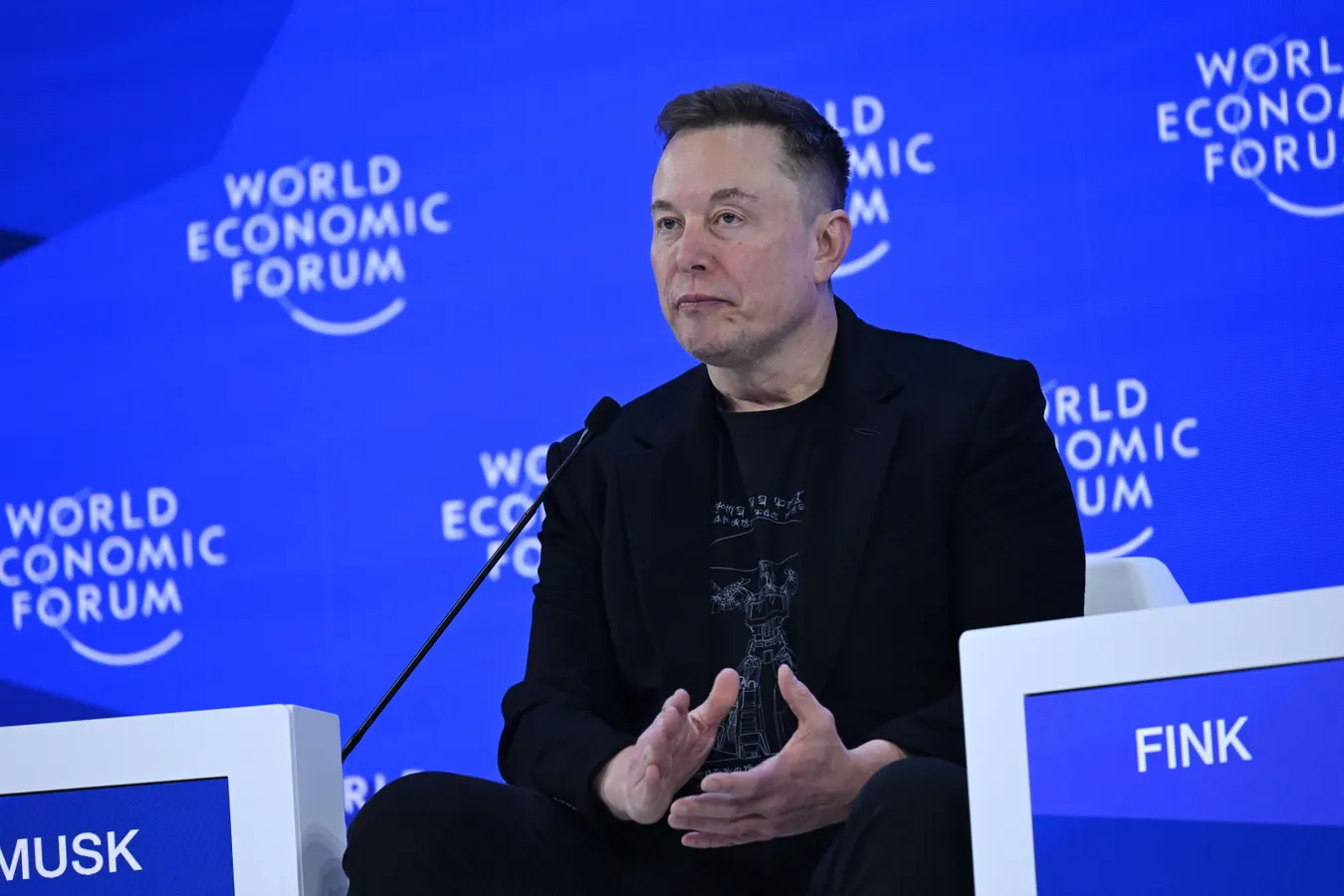
One of Elon Musk’s next plans for SpaceX, which merged with his company xAI earlier this year, is to build data centers in space to support the artificial intelligence boom. And while that prospect poses significant technical hurdles, it’s an idea that may appear more urgent to investors this week after Iran claimed to have hit an Oracle data center in Dubai (a claim denied by UAE officials), and has said it plans to attack more. Earlier this week, space data center startup Starcloud raised a $170 million investment round that valued the company at $1.1 billion. I’d expect more such deals to come in the near future.
Discovery of the Week: AI Helps Spot Heart Valve Disease
Tempus AI CEO Eric Lefkofsky
Getty Images
Every year, more than 28,000 Americans die from heart valve disease, a condition where one or more valves of the heart are damaged, according to the CDC. Despite the severe consequences, it’s both underdiagnosed and undertreated, sometimes presenting virtually no symptoms until it has significantly progressed.
AI might soon be able to help. New findings from health companies Tempus AI and Medtronic tested a system where machine learning algorithms in electronic health records would ping doctors if there were potential signs of valvular heart disease in an echocardiogram–a routine scan of the heart.
In the study, which included 765 doctors and more than 2,000 patients, these automated notifications helped boost the number of life-saving valve procedures by 40% and increased multidisciplinary patient evaluations by 27%, helping to diagnose and treat these conditions earlier. The findings suggest that incorporating these algorithms into digital records could lead to earlier treatment of heart valve disease, and save more lives.
Artemis II Is On Its Way Around The Moon
Wednesday saw the successful launch of Artemis II, the first crewed mission beyond Earth’s orbit since Apollo 17 in 1972. There are four astronauts currently in the Orion capsule that will be making its way around the Moon (further than any humans have gone before) and back to Earth over the course of 10 days.
The purpose of the mission is to test the life support systems on board the space capsule and make scientific observations. The information gathered will help NASA prepare for next year’s Artemis mission, which will focus on testing docking maneuvers with human lander systems being developed by SpaceX and Blue Origin. That mission will be followed in 2028 by Artemis IV, in which humans will land on the Moon for the first time in more than 50 years.
Artemis II is a crucial step in NASA’s plans for the Moon, which are increasingly more focused on having humans permanently occupy it. In March, the space agency presented revamped plans for the Artemis mission, which include a pause on building the Lunar Gateway space station around the Moon in favor of building a surface base–something that took other country’s space agencies, which have already spent significant resources on the Gateway–by surprise.
At a press conference earlier this week, European Space Agency director Josef Aschbacher said it planned on holding discussions about its next steps to support lunar exploration, with hopes of a path forward by early summer.
On My Radar
Q-Day May Be A Lot Closer: Two reports this week, one from Google and one from CalTech, suggest that “Q-Day” (when quantum computers exist that can break conventional encryption) may be a lot closer than previously thought. This has long been known as a risk, which is why “quantum-proof” encryption standards are already out there, but as quantum computing expert Scott Aaronson wrote on his blog this week: “these results provide an even stronger impetus for people to upgrade now to quantum-resistant cryptography. They–meaning you, if relevant–should really get on that!”
Fusion Team-Up: Commonwealth Fusion Systems and Realta Fusion announced a strategic partnership this week, with a goal of designing and manufacturing the magnets Realta will use to develop its compact, modular fusion power generators.
Pro Science Tip: Make A Science-Based Espresso
When it comes to making a good espresso, a little physics goes a long way. In new research published this week, perfect espresso is all about the preparation. The key tools? A consistent amount of beans and your grinder. Just like a good cold brew, it’s all about the grind: You want to fine-tune the grind size to brew the espresso for about 30 seconds. That fine grain optimizes the surface area of the coffee, slowing down the flow enough to get a good flavor from the coffee without it being too bitter.
What’s Entertaining Me This Week
So the first quarter of the year is behind us, and it’s been a good one for music so far. I thought about curating a list of my top five 2026 songs, but in the spirit of authenticity, I checked my Spotify plays and will just present the songs released this year I’ve listened to the most so far–a more unvarnished assessment for you, dear readers. They are, in order: “Wasted On Youth” by the Molotovs, “you and forever” by The Bleachers, “Sunshine (never trust anyone named jeanette)” by Boys Go To Jupiter, “The Great Divide” by Noah Kahan and “Escape From Planet Earth” by Bic Runga. Which, honestly, is probably pretty close to the list I would have picked anyway. Give ‘em a listen!